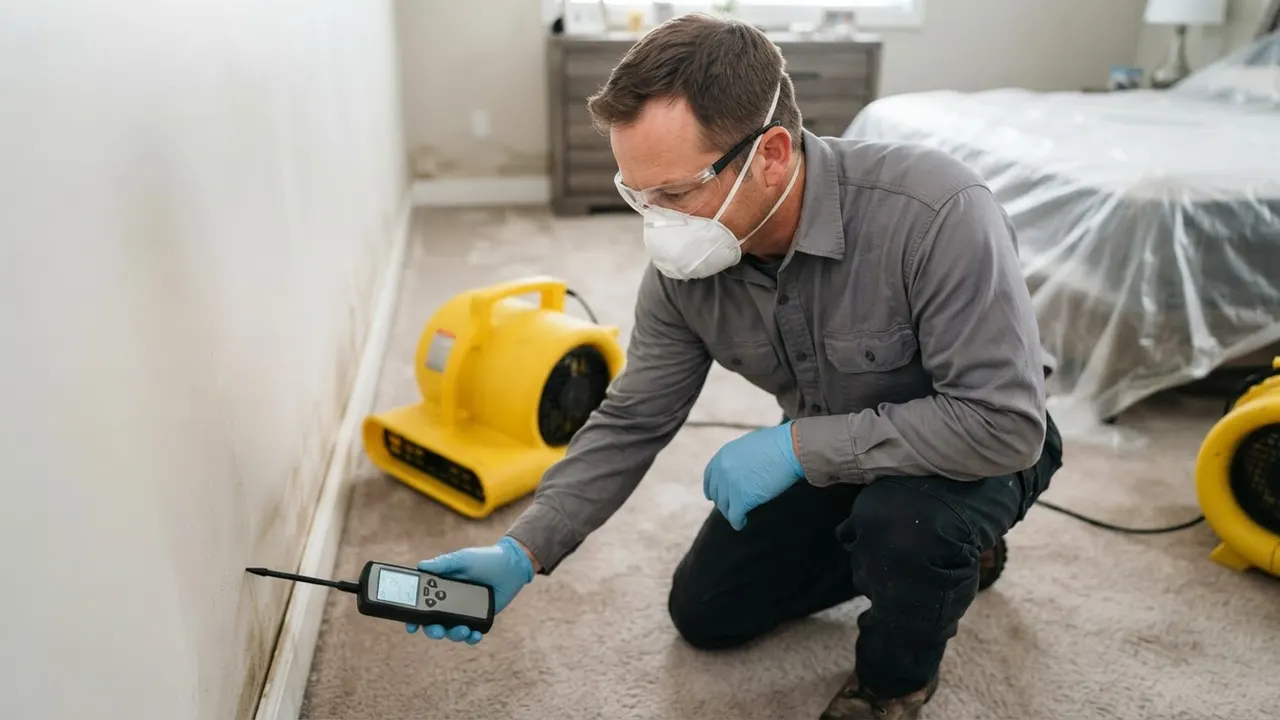
Moisture Readings
Recorded checks of affected building materials.
Storm damage water removal Mesquite NV helps homeowners, tenants, and property managers limit damage after wind-driven rain, roof leaks, and storm flooding. Our team extracts standing water, checks affected rooms, and sets up drying equipment where needed. For storm damage restoration Mesquite NV, call Mesquite Water Damage Company at (833) 546-4116 to discuss the water source and the rooms affected.
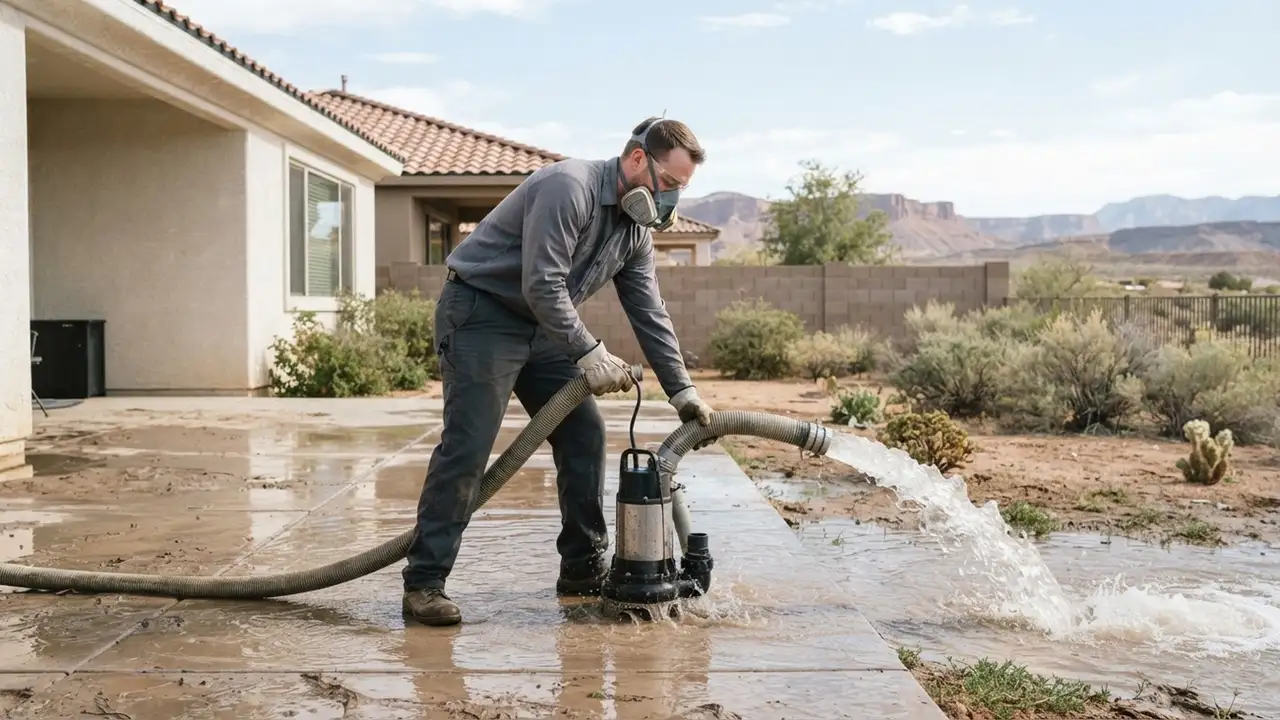
Storm damage water removal covers inspection of the affected area, extraction of accessible standing water, moisture checks, and drying equipment setup when needed. We explain material conditions and document the work performed. Repairs to the roof, plumbing, drywall, flooring, or insulation are separate tasks based on the damage found, and we clarify the next steps with you.
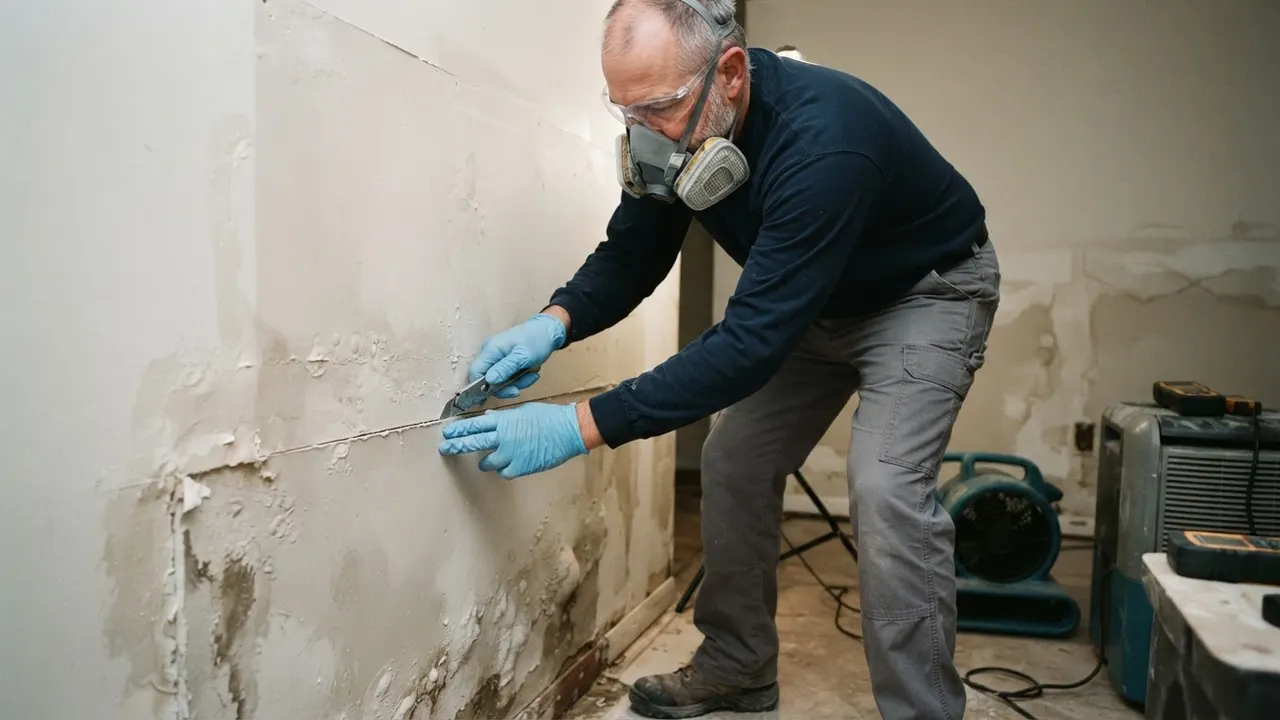
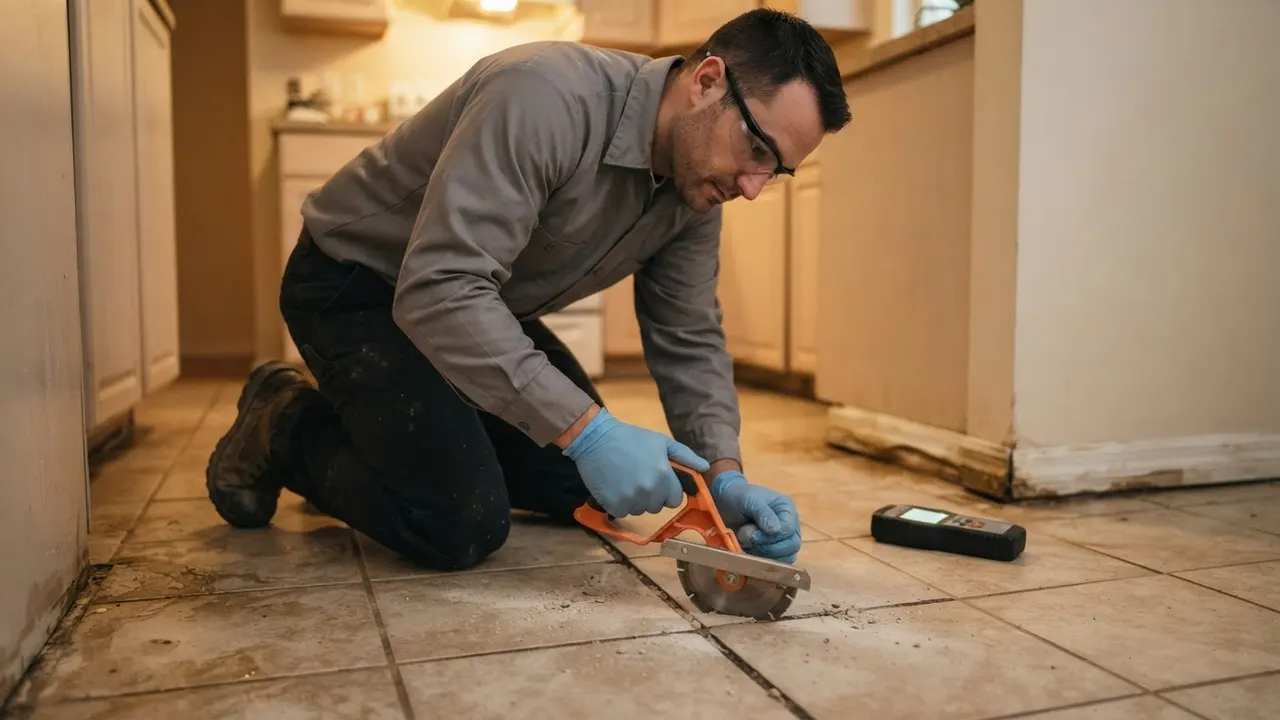
We remove storm water from homes and check the materials it reached, from carpet edges to ceiling cavities. You get a clear drying sequence for the affected rooms and contents.
We assess water in business spaces and plan extraction around walkways, contents, and affected work areas. You receive a practical sequence for drying and repairs.
Storm damage water removal Mesquite NV is a water mitigation service that extracts storm water and dries building materials after rain or flooding enters a property. We locate visible water, check concealed areas with a moisture meter, and identify materials that need drying or removal. A water extraction unit removes pooled water; air movers and a dehumidifier support controlled drying. We document affected rooms and explain the next steps so you know what is being treated and why. Quick extraction matters because wet drywall, insulation, carpet padding, and baseboards can deteriorate as moisture remains.
Mesquite properties can see wind-driven rain around roof edges, water entering through damaged openings, or runoff collecting near a foundation. In Clark County, a storm can leave water beneath flooring or inside a wall even after the surface looks dry. Our storm water removal Mesquite service starts by tracing the water path and checking nearby materials. If you are searching for storm water damage cleanup Mesquite NV, tell us when the water entered, whether it is still flowing, and which rooms are affected.
Measured extraction removes free water first, then guides drying where materials remain damp.
Storm damage restoration Mesquite NV begins with the water source, affected rooms, and safety conditions. We then remove water, check materials, and set equipment based on measured moisture. The first visit focuses on stabilizing the property and laying out the drying plan; follow-up checks establish whether materials are approaching dry conditions.
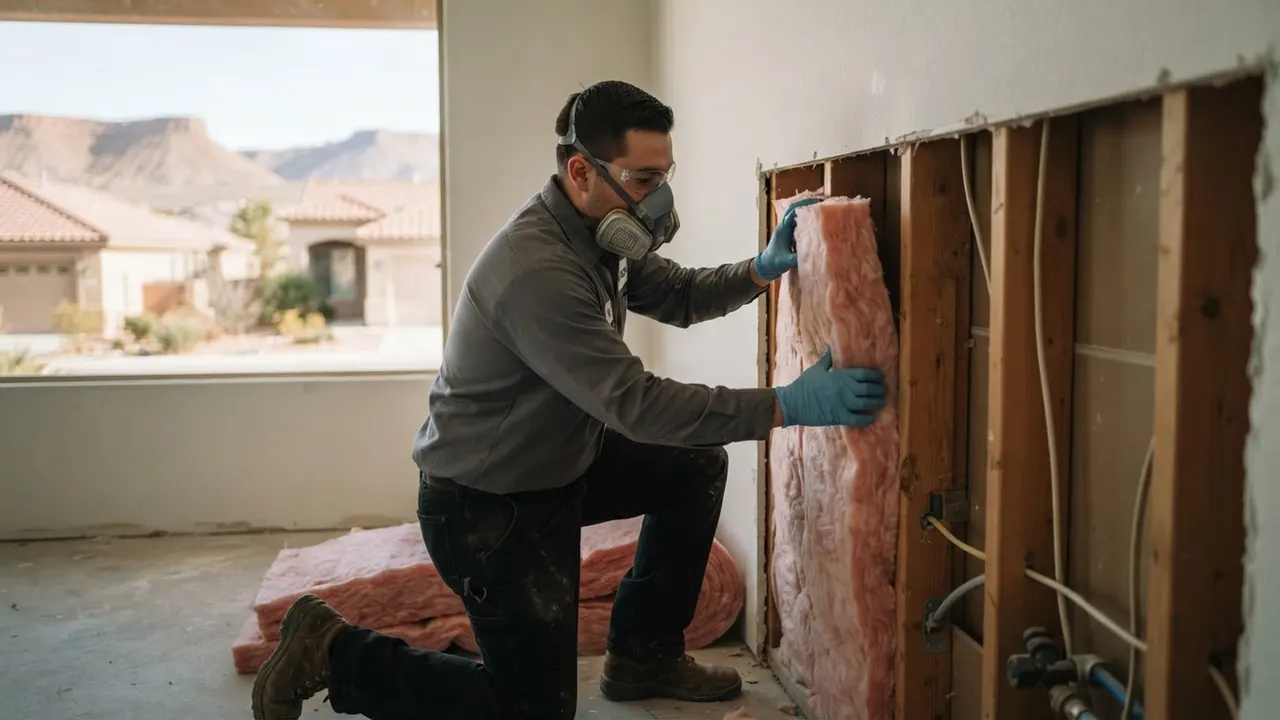
When you call (833) 546-4116, tell us where water entered, whether it is still coming in, and if electricity or a ceiling is affected. We use those details to prepare for the site visit and identify urgent hazards. If water is near electrical equipment, keep clear and do not enter the affected area until it is safe.
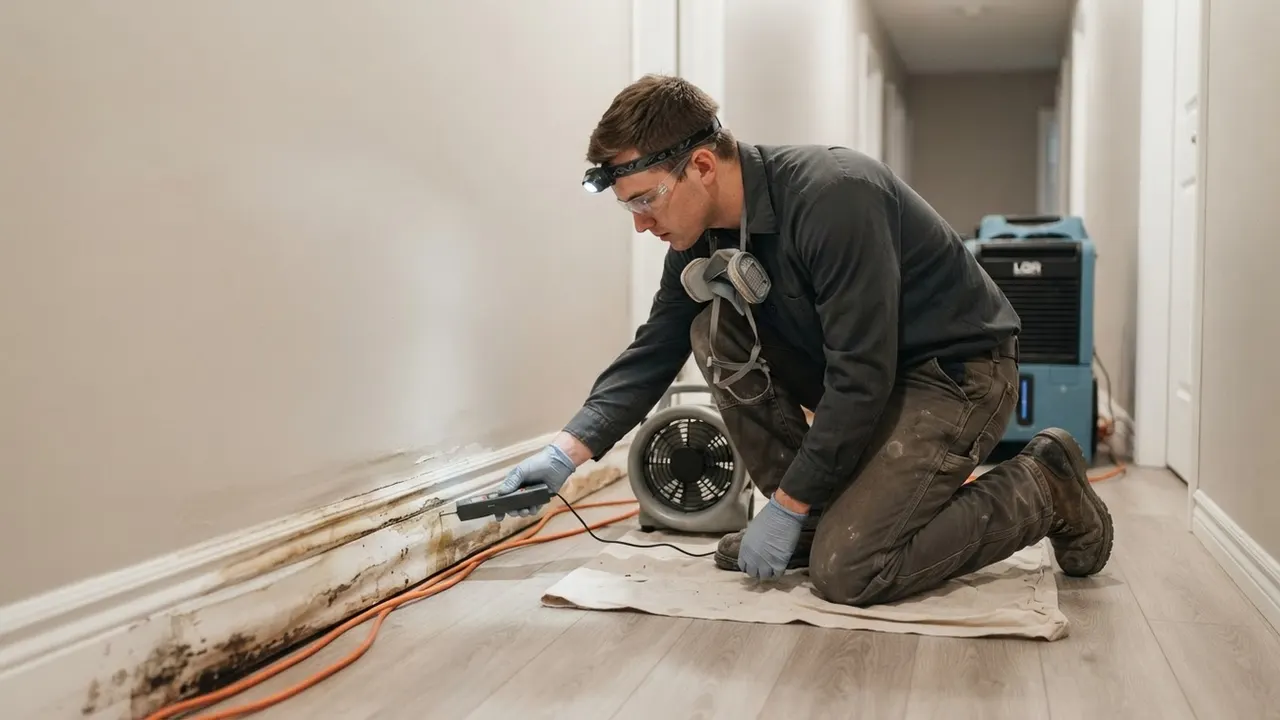
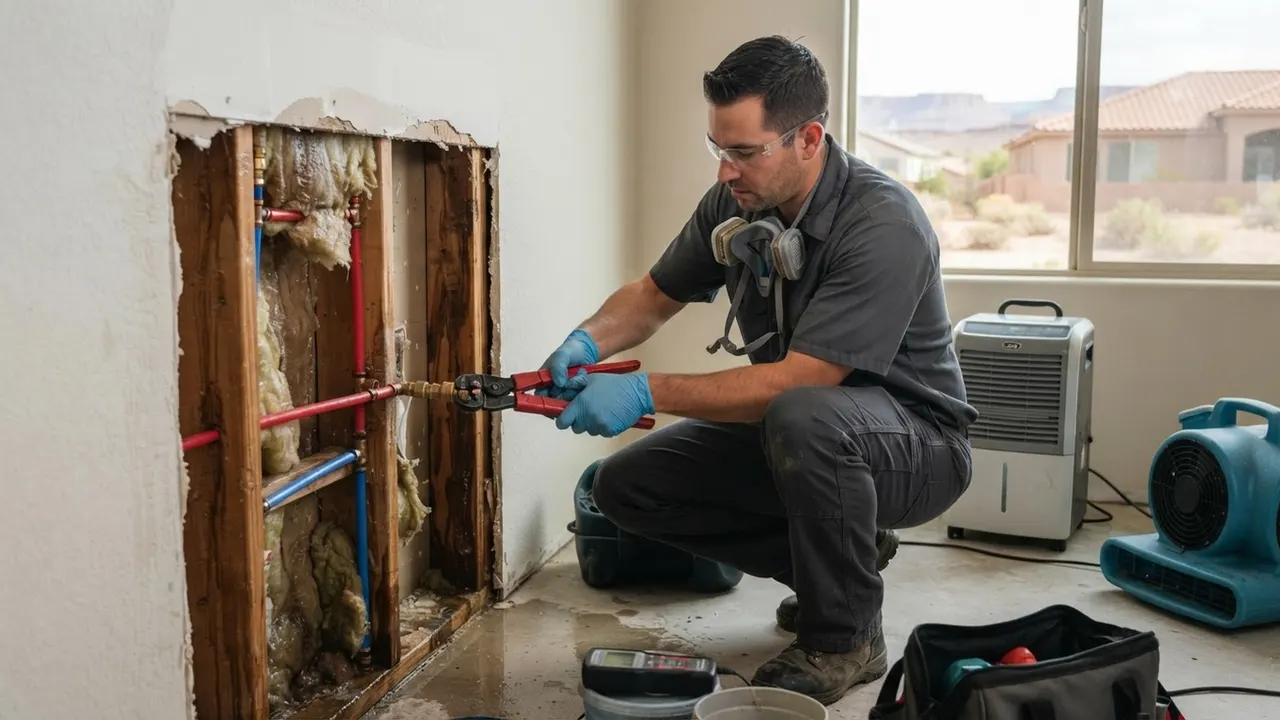
We walk the affected rooms, identify the likely water path, and check visible and concealed moisture. A moisture meter helps locate wet building materials, and thermal imaging can help flag temperature patterns that deserve closer inspection. We note the affected surfaces, contents, and access points before selecting extraction and drying methods.
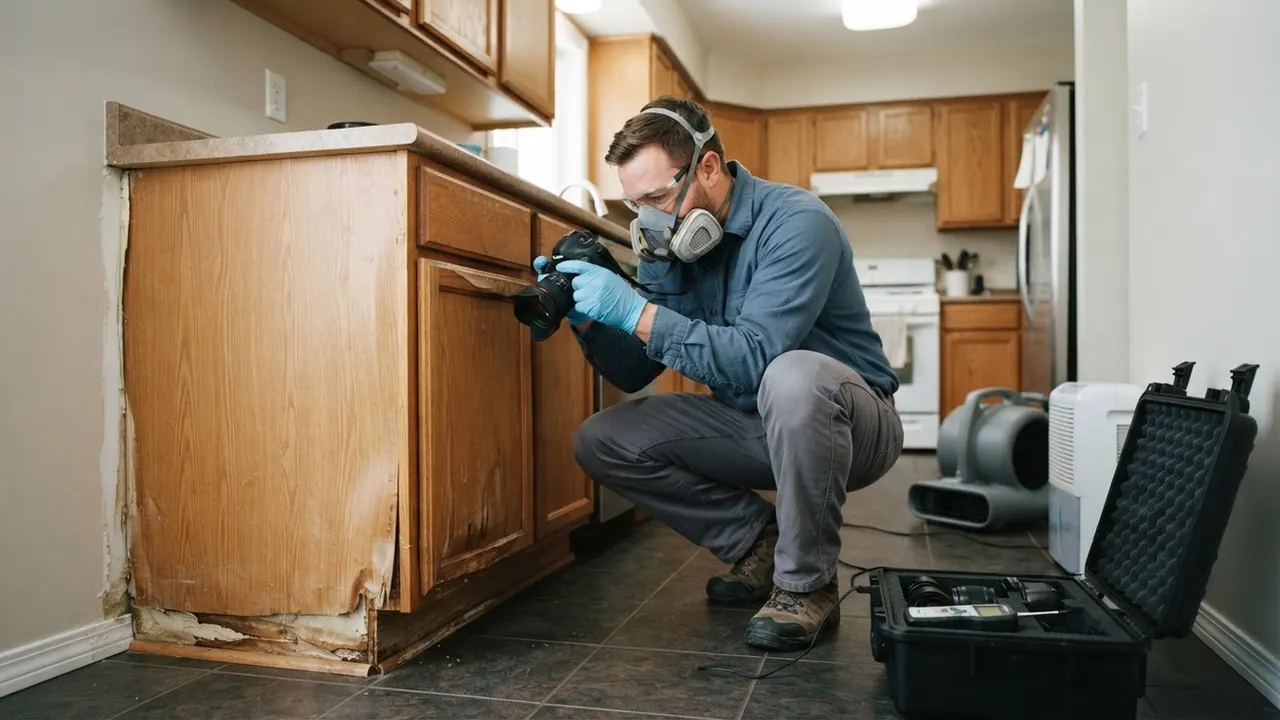
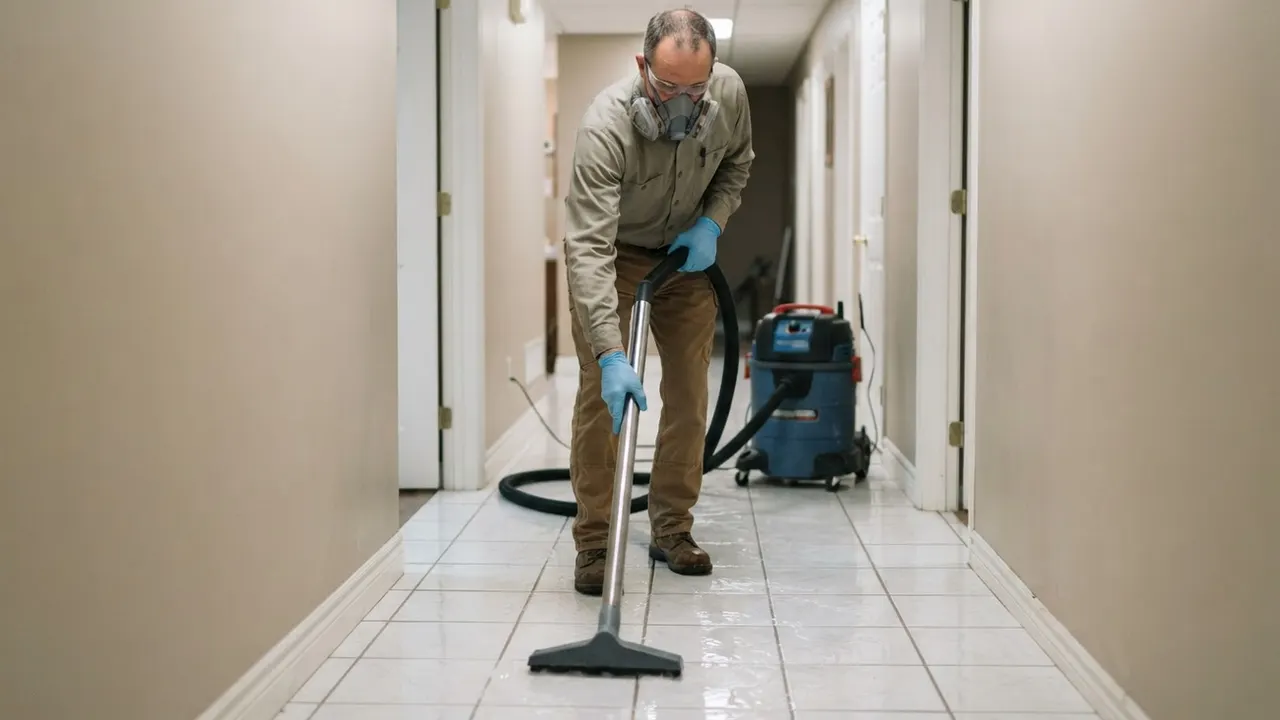
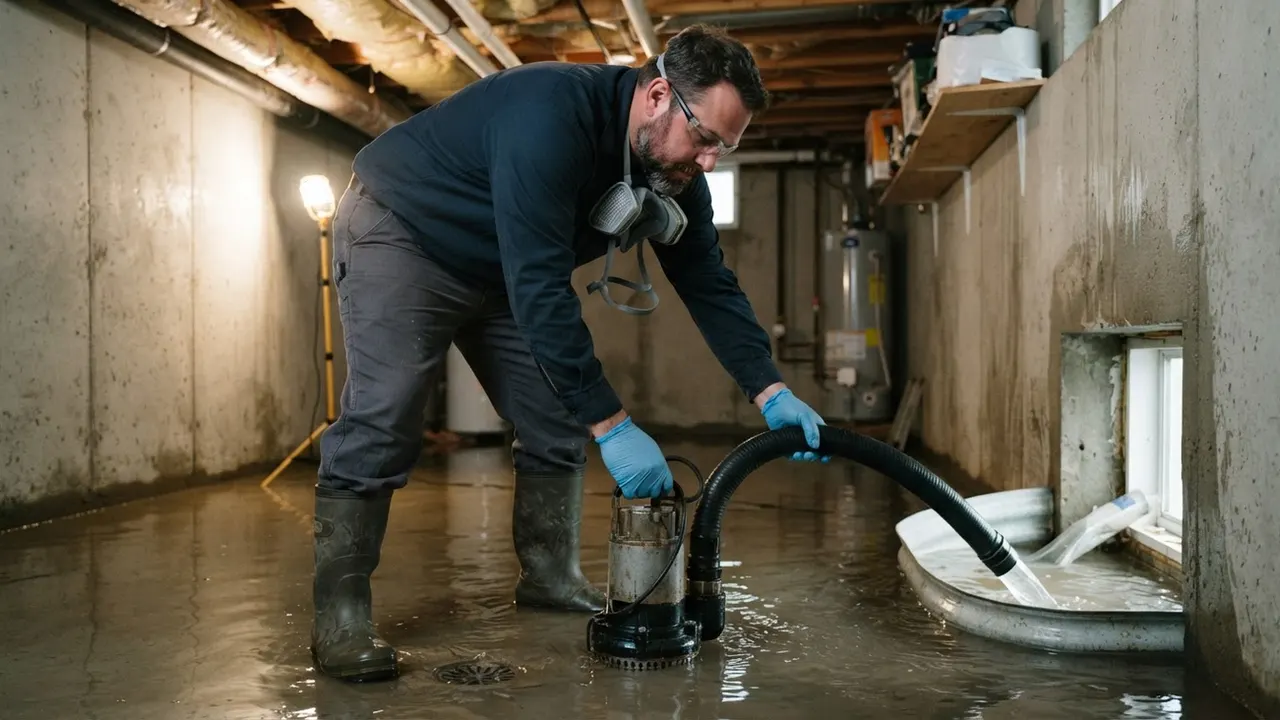
We use a water extraction unit to remove accessible water from floors and other suitable surfaces. The work area is kept organized, and movable contents are shifted when that helps expose wet flooring. Extraction time varies with water volume and room access; a single room may take a few hours, while widespread flooding takes longer.
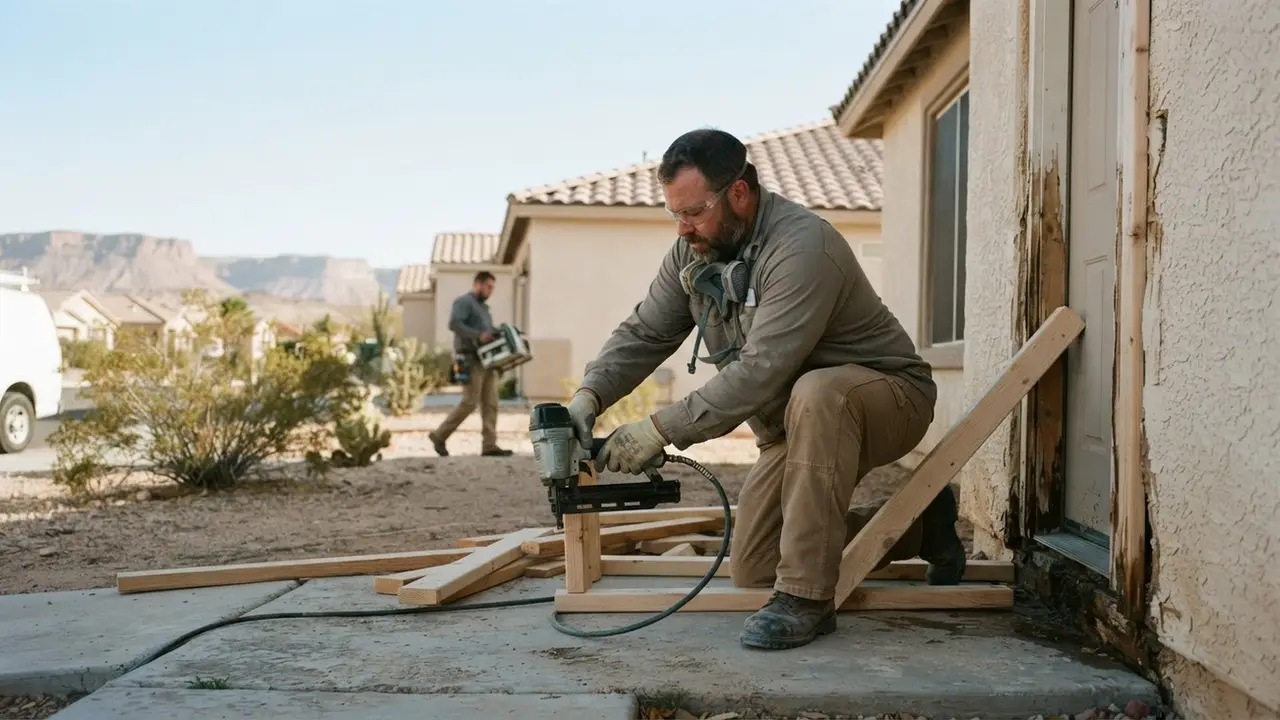
After extraction, we place air movers to circulate air across wet surfaces and a dehumidifier to collect moisture from the room. We avoid directing equipment blindly into closed cavities; the moisture readings guide placement. You will hear equipment running during the drying phase, and we explain which areas it is serving.
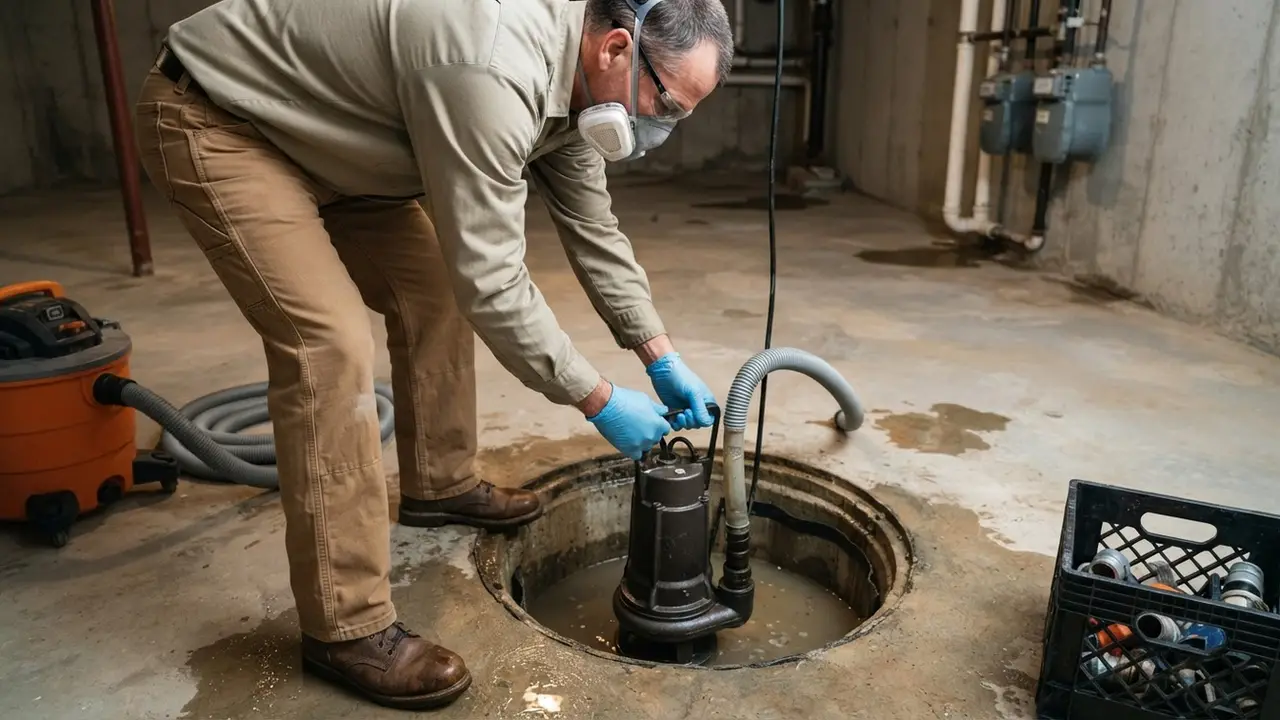
We return to check moisture readings and adjust equipment as the materials dry. Many contained losses need several days of drying, but materials, humidity, and water volume change the timeline. At the review, we explain whether drying is progressing, whether damaged materials need repair, and what should happen next.
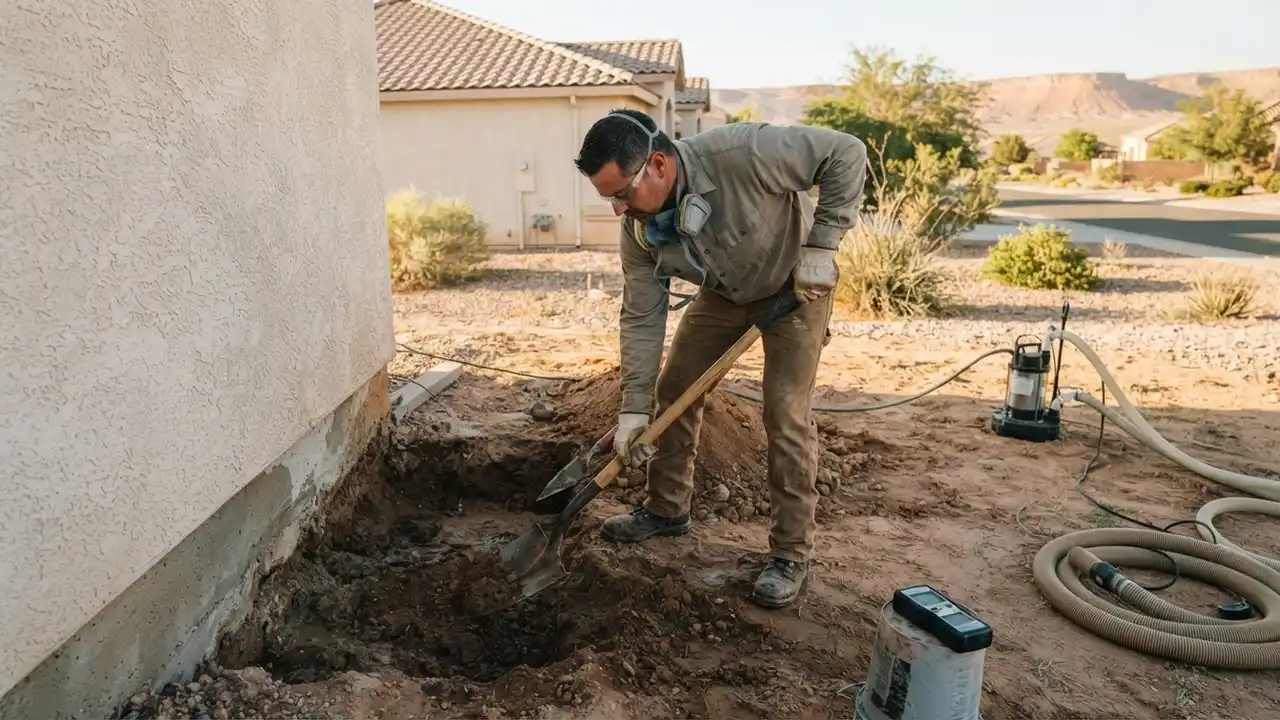
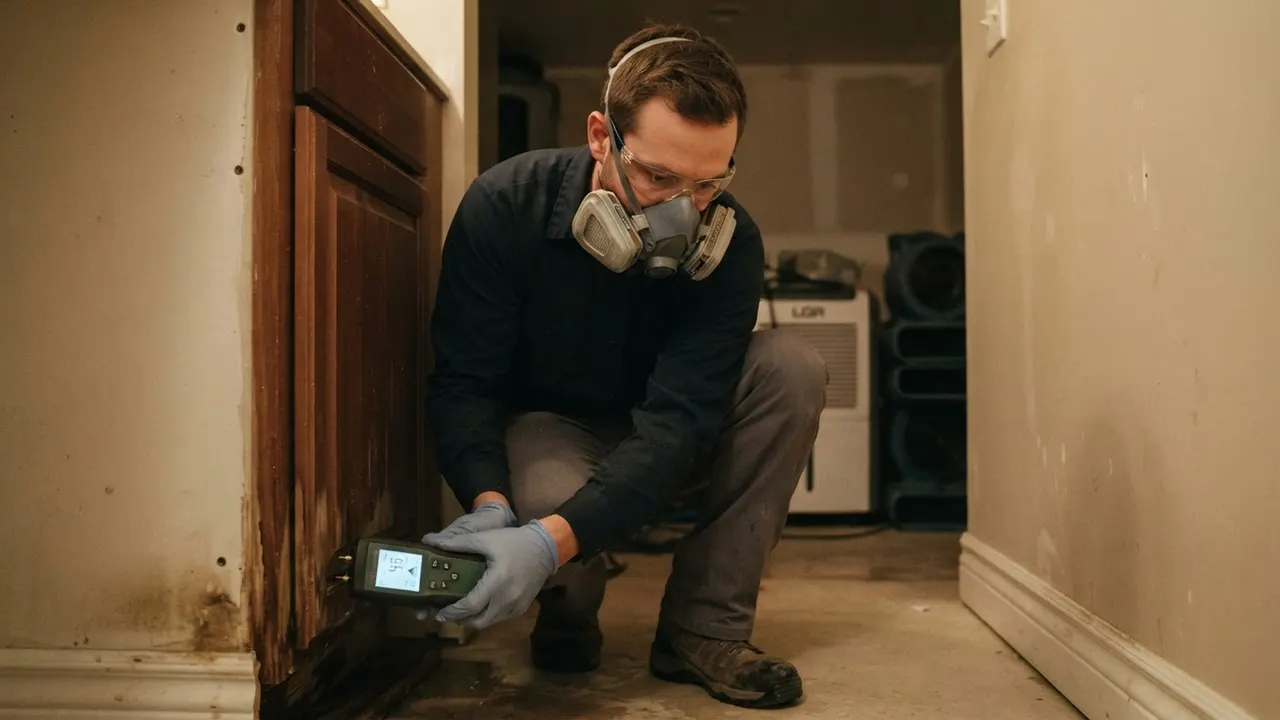
We check moisture in drywall, baseboards, and flooring, comparing affected spots with nearby unaffected material to guide drying and follow-up checks.
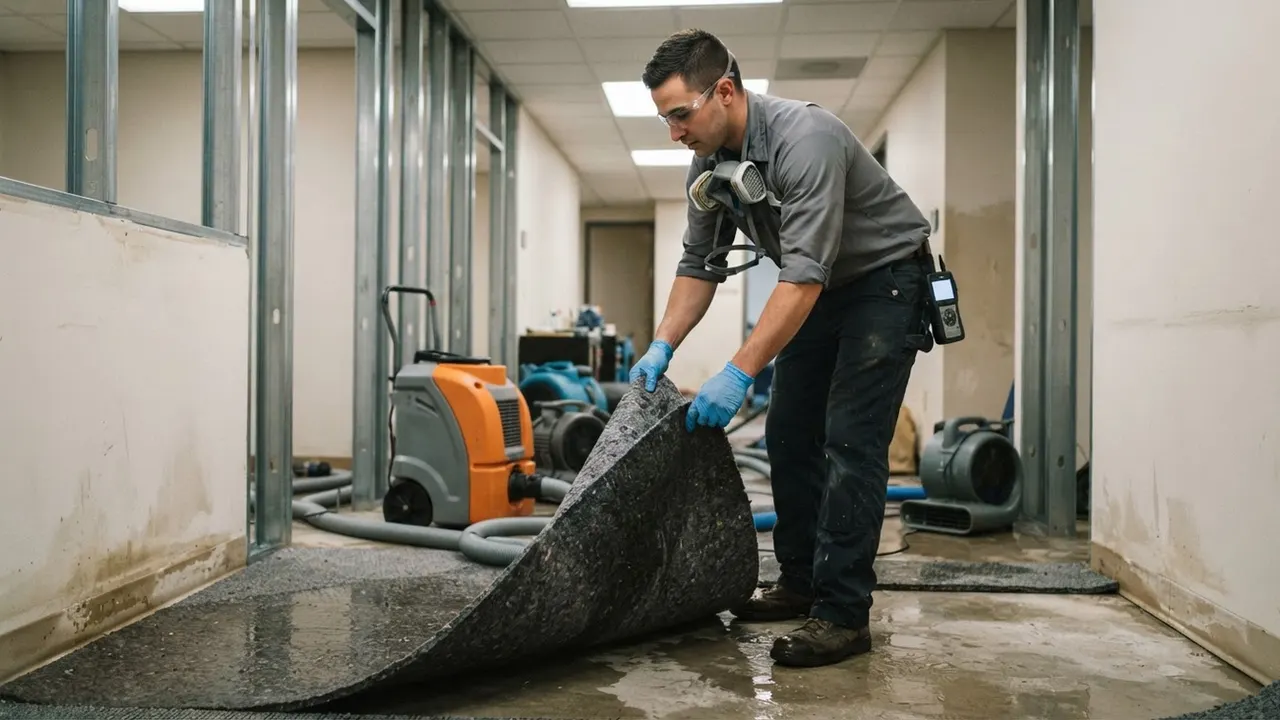
We use temperature patterns to flag areas that may need closer moisture inspection; the camera helps target checks but does not replace direct measurement.
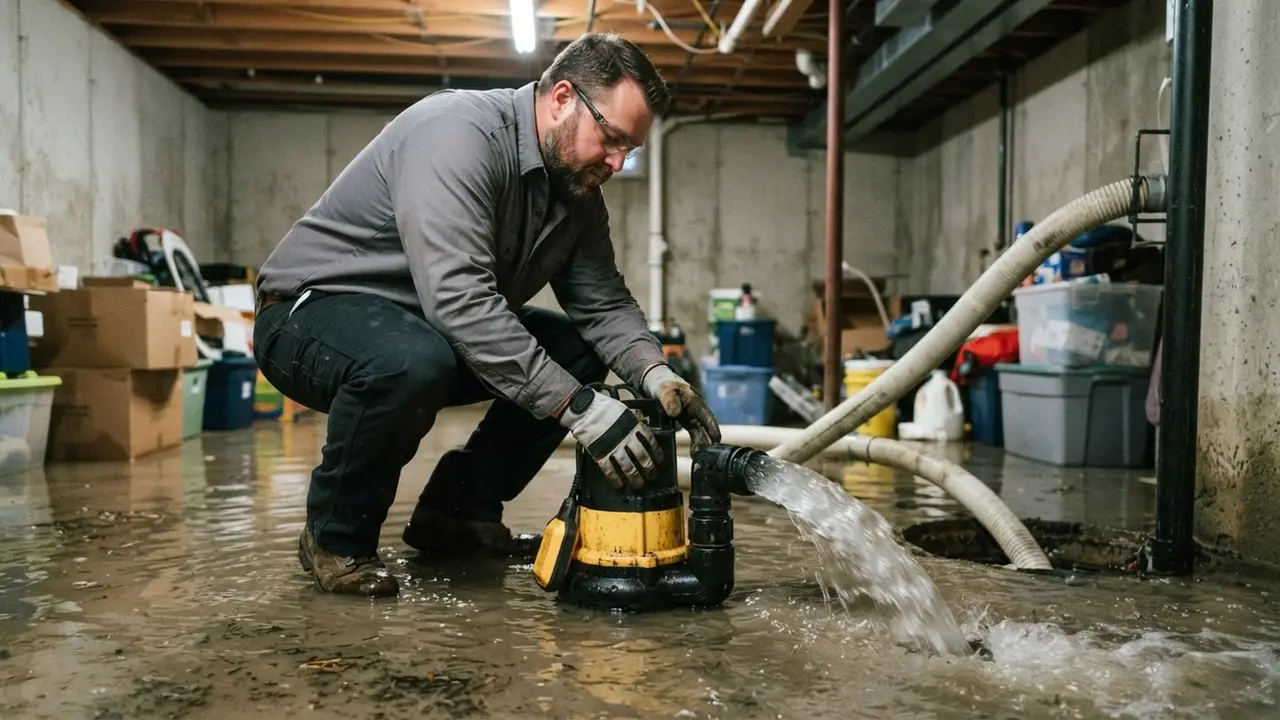
We remove accessible standing water from suitable flooring and surfaces before setting equipment to dry moisture retained in building materials.
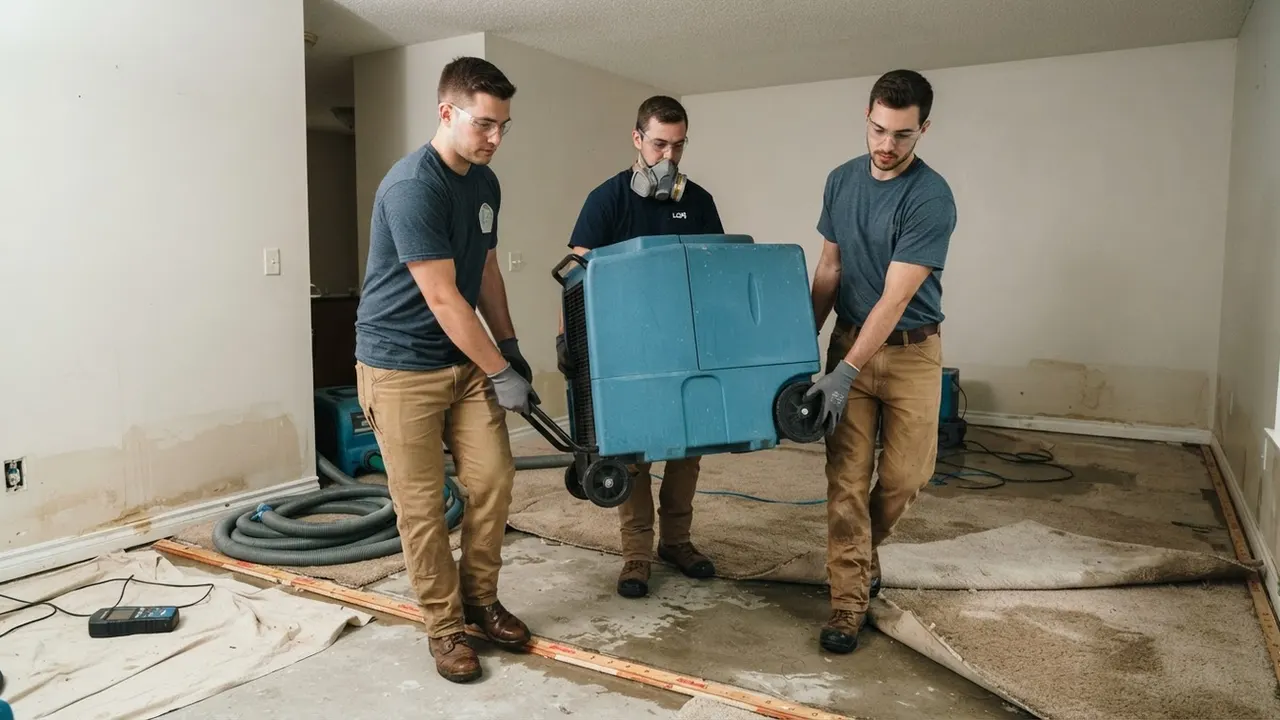
We position air movers to circulate air across wet surfaces and improve evaporation, adjusting placement to match the room and measured conditions.
We use dehumidification to collect moisture from room air during structural drying, then monitor conditions to assess progress.
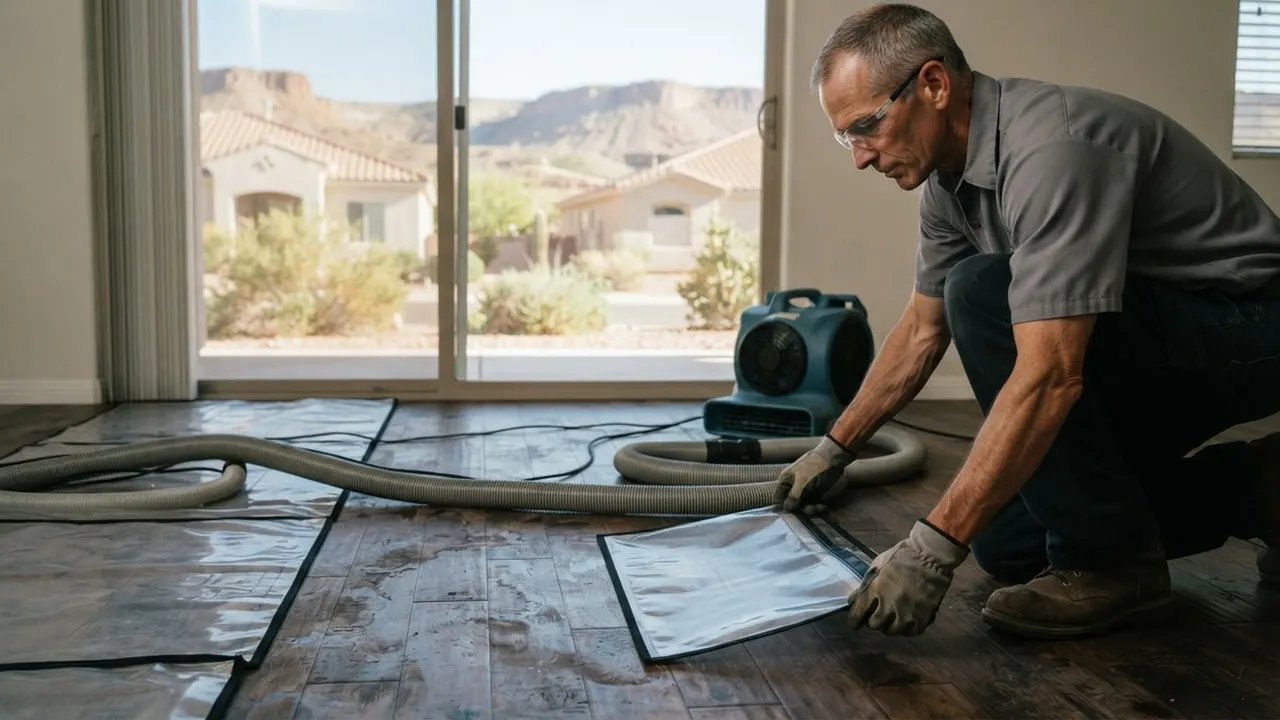
When the work creates airborne dust during controlled removal, an air scrubber helps capture particles in the work area.
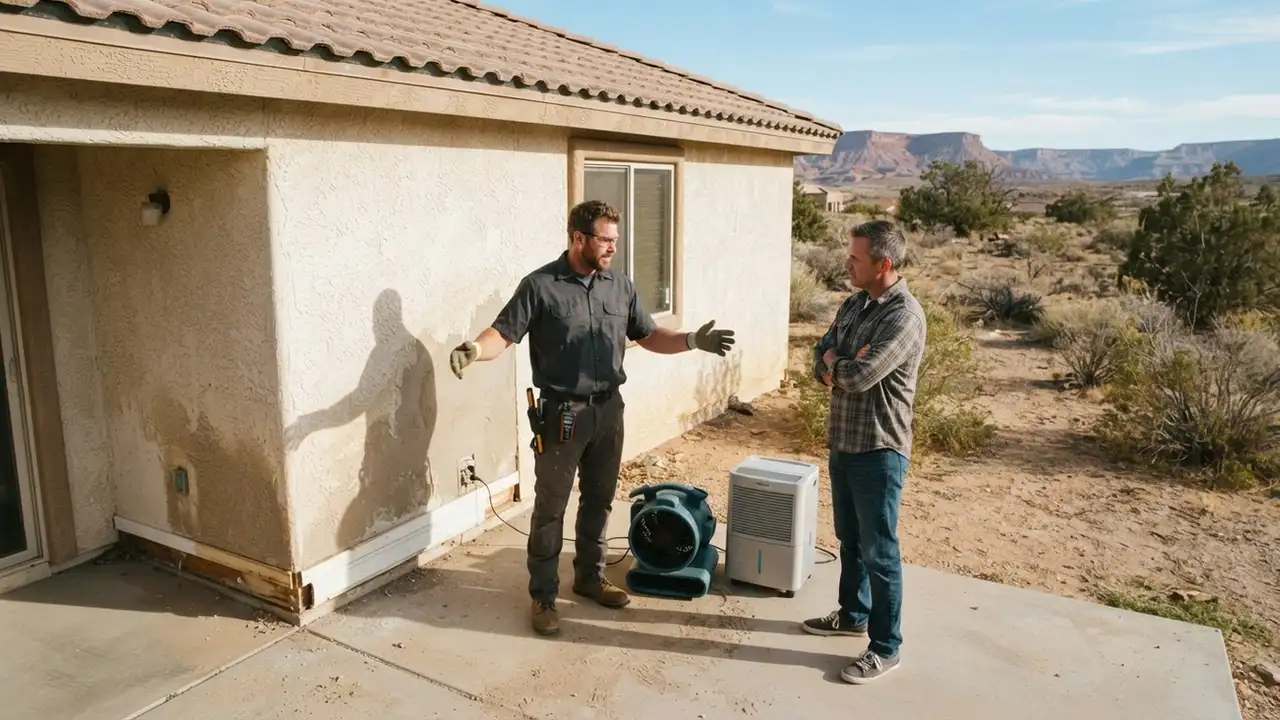
We follow visible water marks and inspect adjoining surfaces to understand where storm water traveled. Moisture readings help confirm which materials remain wet. Mapping the path helps us avoid missing a damp closet, wall edge, or floor transition simply because it is outside the first puddle.
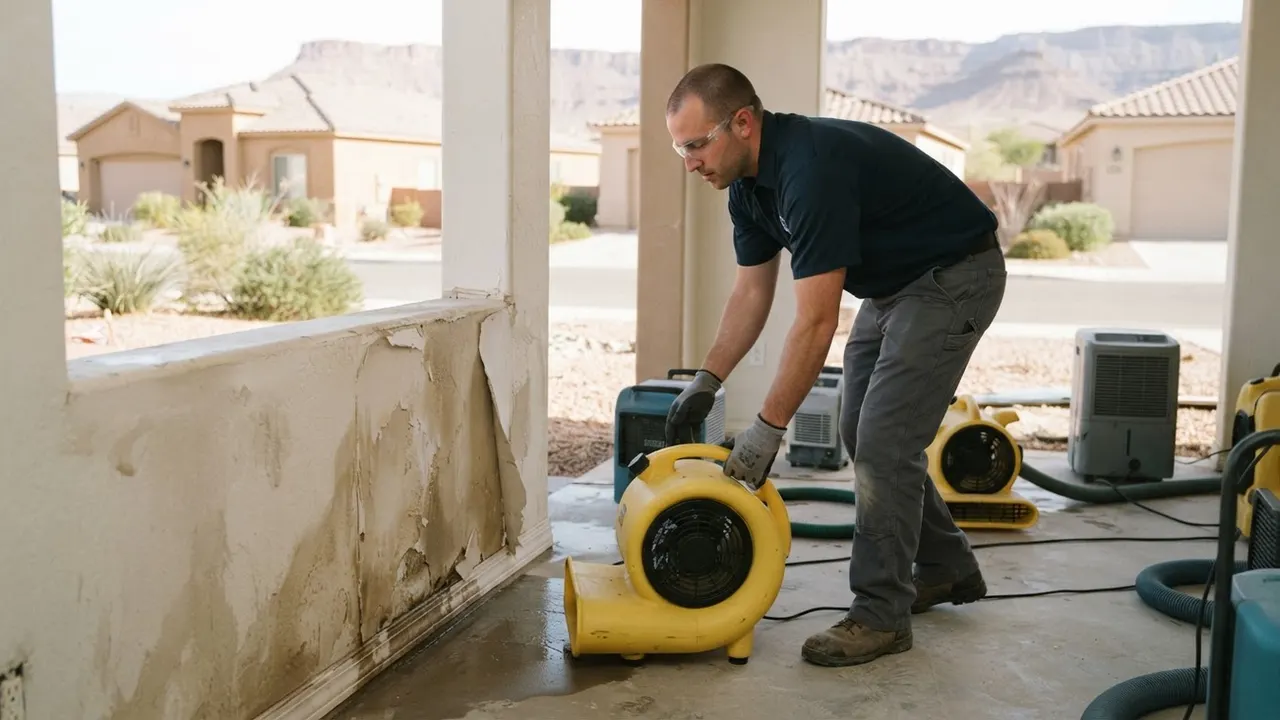
We remove free water before relying on air movement or dehumidification. Extraction reduces the load on drying equipment and limits continued contact between water and building materials. We select the approach based on the surface, access, and whether the water is suitable for ordinary handling.
We inspect the ceiling, wall edge, carpet, and padding to see how far water traveled. Our team extracts accessible water, checks the floor beneath the carpet, and sets drying equipment based on readings. If the opening remains exposed, we discuss temporary protection so the next rainfall does not add to the damage. You get a documented drying plan for the room, a clearer view of affected materials, and a prompt next step for the roof opening.
We move or protect accessible contents, extract standing water, and check grout edges and adjoining baseboards. A thermal imaging camera can help identify areas for closer inspection, while a moisture meter confirms material conditions. We also ask whether runoff carried soil or debris into the room. Water is removed from accessible surfaces, hidden damp areas are identified, and the cleanup approach reflects the condition of the incoming water.
We treat a sagging ceiling as a safety concern and keep people clear of the area while assessing access. Our team checks for trapped water, extracts what can be reached safely, and traces the likely roof entry. We explain whether temporary protection or controlled material removal is the next step. The immediate area is kept clear, active water is addressed safely, and you know what must happen before the ceiling can be repaired.
We inspect the entry, nearby flooring, and any affected contents, then prioritize extraction from walkways and work areas. If water reached electrical equipment or stored goods, we mark those areas for careful handling. Drying equipment is placed to support the property layout and reduce disruption where practical. The business receives a clear account of affected areas, a drying setup, and a practical sequence for cleaning and repairs.
Storm damage restoration Mesquite NV starts with conditions at your property, not a generic weather assumption. Mesquite's dry climate can make exposed surfaces feel dry while moisture remains beneath flooring or inside a wall. We use readings to check those concealed areas. Homes and commercial buildings with tile, carpet, drywall, and wood framing each need a different drying setup. A roof leak near an exterior wall calls for a check of the ceiling, insulation, and baseboards; runoff at a doorway calls for attention to flooring transitions and nearby contents. If storm water reaches a crawl space or lower-level room, we inspect access and the materials below the living area. We also distinguish ordinary rainwater from water that has contacted soil or sewage. For same day storm damage water removal Mesquite NV, call with the address, water source, and affected rooms so we can discuss the response. We serve Mesquite locations across Clark County and record moisture conditions as the work progresses. Any rebuilding should follow applicable local requirements and the condition of the materials, not simply the appearance of a dry surface.
Wind-driven rain entered near the bedroom roof edge and left a wet carpet strip along the exterior wall. The ceiling had a brown mark, and the baseboard felt swollen. The homeowner could not tell whether the water had reached the carpet padding or wall cavity, so the visible stain did not show the full extent.
We extracted surface water, checked the carpet edge and baseboard, then placed air movers and a dehumidifier. Follow-up readings over four days showed the affected materials trending toward the nearby dry-room baseline. The ceiling and wall were documented for the next repair stage after the source was addressed.
After roof repair, check the ceiling and baseboards after the next heavy rain. Keep furniture a few inches from the wall during the initial drying period and report any returning stain or musty odor.
Runoff entered a living area and collected around furniture and along tile grout. Water had reached a rug and the nearby baseboards, while soil was visible near the doorway. The room looked manageable, but moisture at the edges and the water condition needed assessment before ordinary drying began.
We removed standing water, separated affected contents, and checked the floor edges and baseboards. The area was cleaned according to the water conditions, then drying equipment ran while readings were monitored for three days. The owner received a clear account of what was cleaned and which trim needed further repair.
Keep exterior entry points clear of debris and watch the doorway during heavy rain. If water returns, photograph the entry path and call promptly rather than placing rugs over the wet floor.
Water entered above a hallway and left a sagging section of ceiling with a small puddle below it. The occupants avoided the area but were unsure whether more water remained overhead. The surrounding wall and floor also needed checking because water can travel beyond the spot where it drips.
We kept the area clear, assessed the ceiling safely, and removed accessible water before checking the adjacent wall and floor. Moisture readings guided the drying setup, and a follow-up review confirmed reduced moisture across the checked areas over five days. The damaged ceiling section was identified for repair.
Keep the hallway clear until the ceiling repair is complete. Check the repaired area after rainfall and report any new discoloration, soft spots, or dripping so the source can be reassessed.
Storm water does not always stay where it first appears. Water can travel beneath finishes, collect at wall edges, or soak materials above a ceiling. Our team checks the visible damage and the likely path so your cleanup addresses the source and the affected building materials.
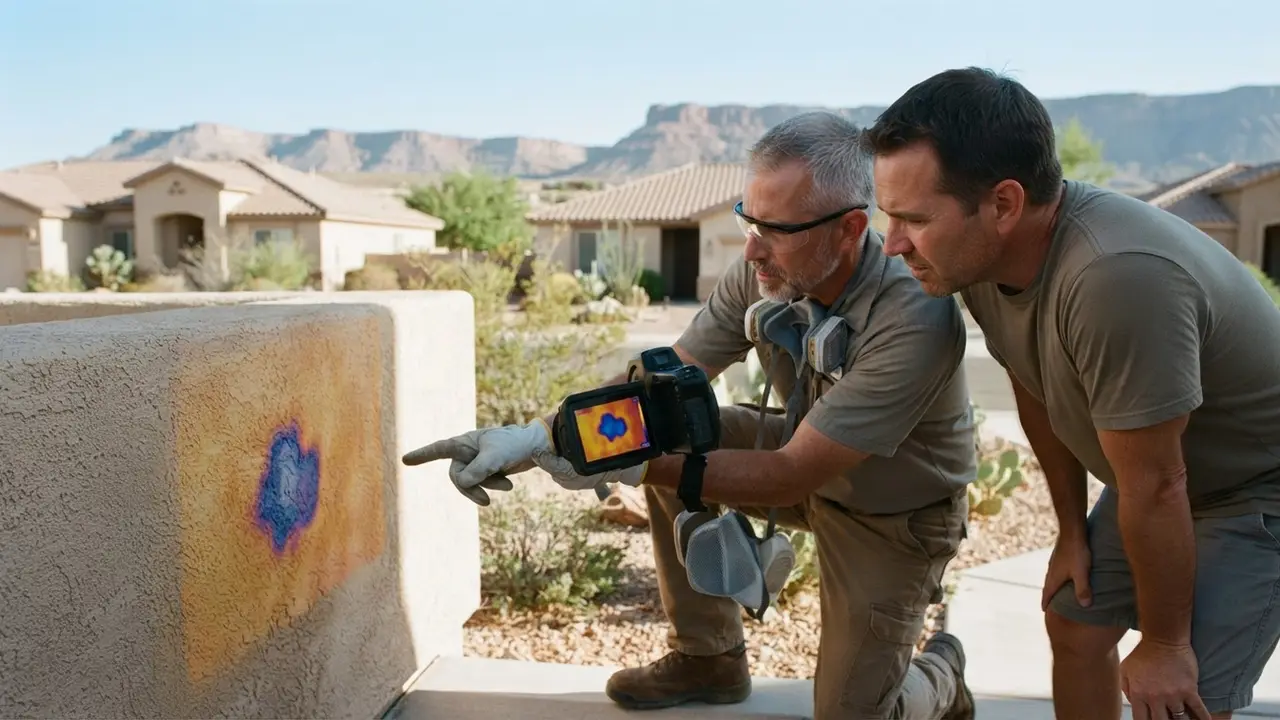
We locate the interior water path, extract accessible water, and assess the ceiling and nearby walls. If rain is still entering, we coordinate immediate protection such as temporary tarping before focusing on structural drying. You get a sequence that addresses new water first and existing moisture second. Continued entry can wet ceiling board, insulation, and framing, spreading damage beyond the first stain and delaying safe drying.
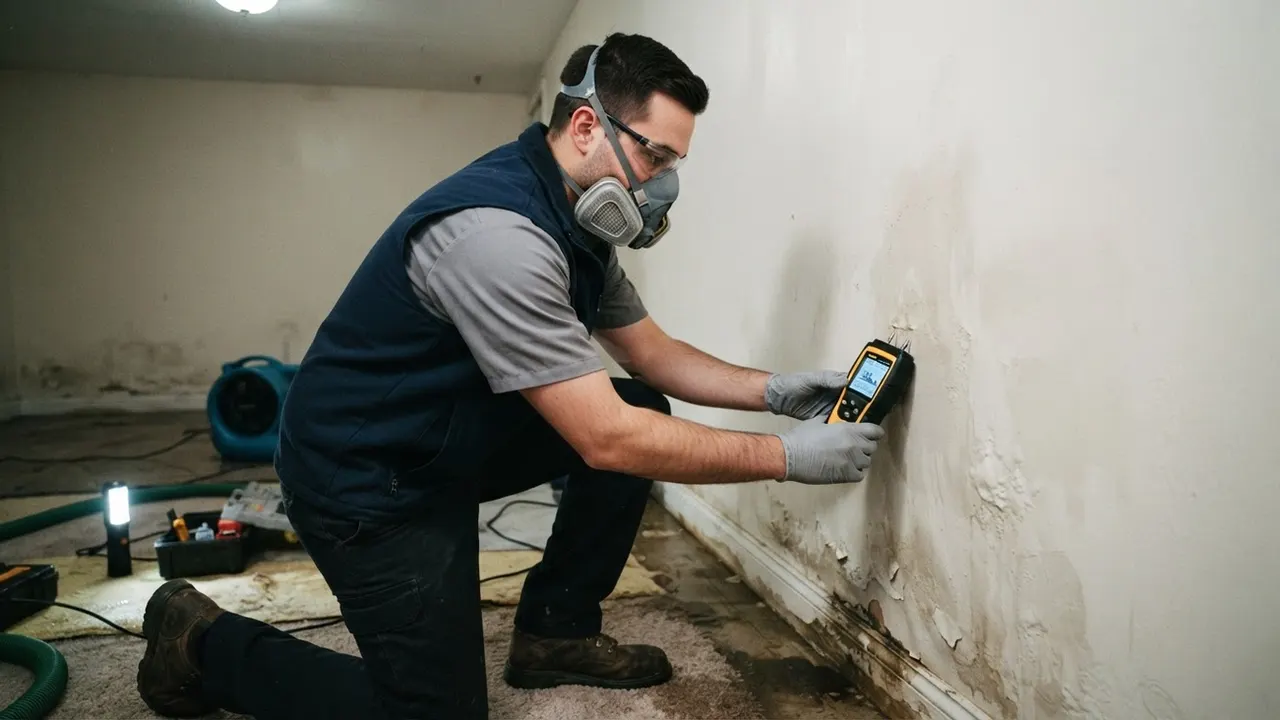
We check the carpet edge, padding, and underlying floor rather than judging by touch alone. Extraction and moisture readings show whether drying in place is appropriate or whether wet padding must be removed. We then set equipment to address the materials that are actually holding water. Trapped moisture can persist below the carpet, affect the floor assembly, and create a musty odor after the surface appears normal.
We map the affected section with visual checks and moisture measurements, then explain where drying can work and where material removal is needed. Our storm water damage cleanup Mesquite NV process tracks the water path instead of treating only the stain. Moisture can travel inside drywall and insulation, weakening finishes and leaving a damp cavity that is difficult to see from the room.
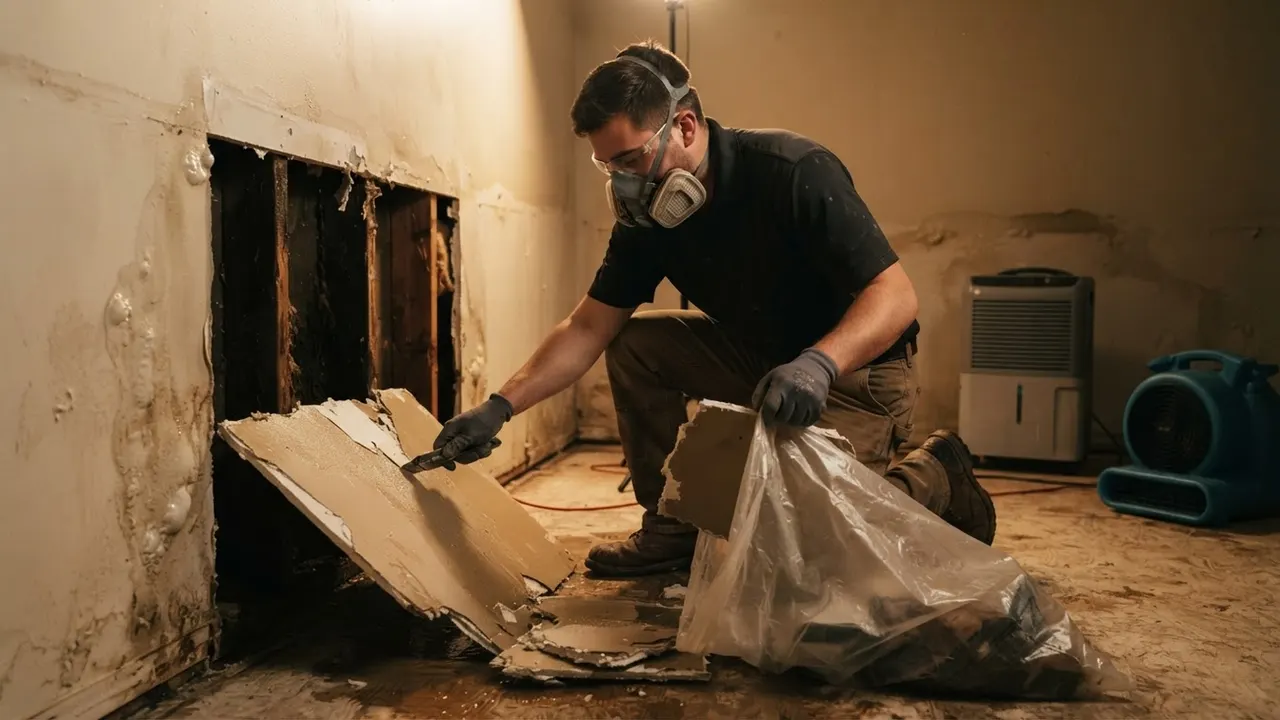
We ask about the water source and inspect for visible contamination before selecting cleanup methods. If the water is not clean rainwater, we adjust material handling and surface treatment. The priority is to protect occupants and remove affected material appropriately, not simply circulate air. Water that contacts sewage or soil requires different handling, and ordinary drying alone does not address contamination on affected surfaces.
We remove pooled water from accessible floors and low areas before it continues soaking nearby materials. A water extraction unit is suited to open water; smaller tools address edges and tight spaces. The amount removed depends on the affected area, but the goal is direct: clear standing water first, then measure what remains in the structure.
A moisture meter helps us compare damp materials with unaffected areas, while a hygrometer tracks room humidity. You can see whether drying is progressing instead of relying on touch alone. We record readings during the job and adjust equipment placement when a wall, floor, or room remains wetter than adjacent areas.
Storm water can affect carpet padding, drywall, insulation, plywood, and baseboards at different rates. We inspect the materials rather than treating every surface the same way. That helps identify what can be dried in place and what needs removal, limiting unnecessary demolition while addressing material that cannot be restored safely.
After extraction and initial checks, we explain which areas need continued drying and which repairs follow mitigation. If the water came through a roof opening, we can coordinate the immediate water response with emergency board-up or tarping. You get a practical order of work instead of several disconnected calls.
Clear records you can keep and share.
Recorded checks of affected building materials.
Equipment placement matched to room conditions.
Affected areas and completed mitigation steps.
Removing visible water is the first step, not proof that a room is dry. Moisture can remain inside flooring, drywall, and insulation after the surface looks clear.
Extraction removes accessible pooled water from floors and suitable surfaces. It does not confirm that hidden materials have dried.
Moisture readings help locate damp areas inside or beneath finishes. We compare affected spots with nearby dry materials.
Drying equipment works over time as readings are monitored. We adjust the setup when affected materials remain wetter than expected.
Outside these neighborhoods? Call and ask about service in your area. (833) 546-4116
A small, contained extraction job may vary while multi-room mitigation can vary. Typical 2026 pricing depends on water volume, affected materials, access, contamination, and drying duration. We explain the work and its price before proceeding. Repairs such as replacing drywall or flooring are separate from water extraction and drying.
Move people and pets away from unsafe water, stop the source only if you can do so safely, and call for help promptly. Do not touch electrical equipment in a wet area or enter a room with a sagging ceiling. Photograph visible damage from a safe location and note when the water entered. Our team can assess the affected materials, extract water, and explain the drying steps.
Coverage depends on your policy, the cause of water entry, and any exclusions or limits. Contact your insurer, document the damage, and keep records of mitigation work and readings. We can describe the observed water path and provide job documentation to support your claim, but your insurer makes the coverage decision. Sudden storm-related openings and gradual maintenance problems may be treated differently under policy terms.
A single accessible room may take two to four hours to extract, while a larger flooded property can require a full day or longer. We begin by checking safety and locating water, then remove standing water and set drying equipment. Structural drying often takes three to five days, depending on material depth, humidity, and airflow. Call (833) 546-4116 with the affected area and current conditions.
Standing water can spread into flooring, walls, and belongings while you wait. Call Mesquite Water Damage Company at (833) 546-4116 and tell us where water entered and what is wet. Our team will discuss the next practical step for your Mesquite property.
Call (833) 546-4116 to explain what happened and where water is collecting. We take calls for water damage requests and connect you with an independent company that can discuss service details directly. If the leak is active, shut off the source when safe and tell us whether the water reached electrical equipment, flooring, or more than one room.